

Global AgriTrends
Back08.10.26
Summer Calf and Feeder Markets: What's Next?
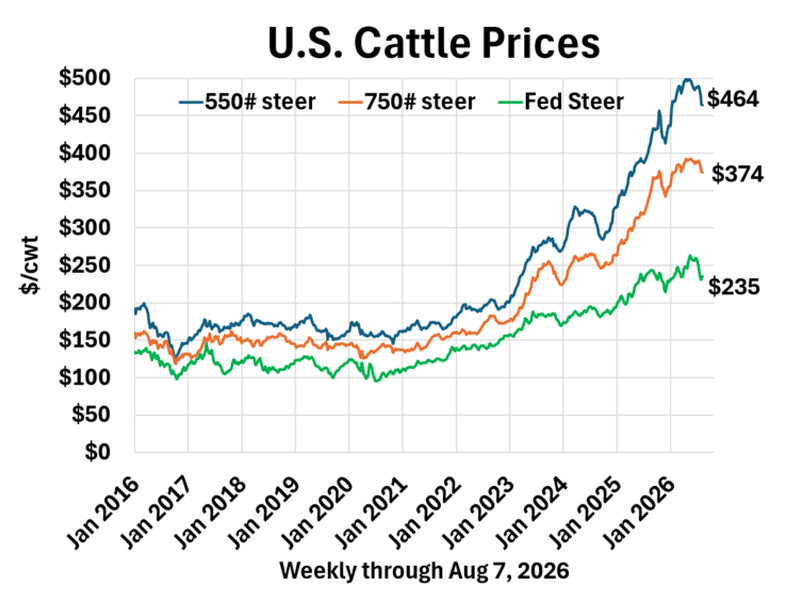
Cattle markets slid lower in June, deepening in July on news that USDA is planning a phased reopening of the Mexican border. This timing came just ahead of key video auctions in July and August.
The spot average U.S. 550# steer price peaked in May at $496/cwt, but has settled back now to $463/cwt. The Superior Video Auction (July 27-30) saw fall delivered 550# steers average right around $465 – right at the spot price. 750# steers averaged $377/cwt, also right near the current spot price.
Those selling on this summer dip can take heart in the fact that these prices remain in the highest range ever for cattle.
Note that these calf and feeder prices are paid by feedyards based on expected fed steer prices in the future. They have a tough job as the CME Live Cattle Futures have traded below their ending prices for most contracts in recent years. That means they don’t find the ultimate price until near expiration. That’s tough news for feedlots justifying high calf prices, and makes hedging difficult to impossible. The math today sees a feedyard buying that fall calf for $2,550 per head against next June’s live cattle price of around $3,379, leaving $829 per head to cover feed (92 bushels of corn), interest, yardage, death loss and medicines. If that sounds decent, log in and bid. But note that next June’s live cattle contract has now ranged $48/cwt from highs to lows (roughly $744/head).
What’s next? Keep an eye on those live cattle futures for the indication of calf/feeder prices. We see tightening beef supplies continuing into next year as the July USDA Cattle Inventory Report showed a continued decline in the U.S. beef cow herd with cows down -200,000 head and heifers up 100,000 (both are less than half a percent of the herd size). Also beef demand remains a key driver. Watch beef cutout pricing as an indicator of that demand. July saw the cutout lower which is often the case. August has a slight higher seasonal tendency; if that occurs, beef demand is likely intact.
Brett Stuart
