

Global AgriTrends
Back01.14.26
2026 Beef Outlook
The USDA World Agricultural Supply and Demand Estimates are updated each month for key agriculture commodities.
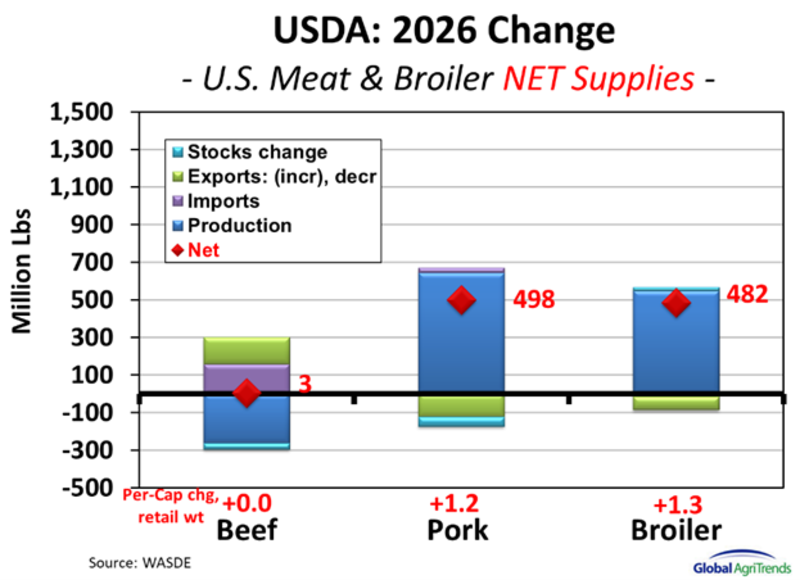
January saw no major changes were made to the 2026 beef balance sheet. The board now shows 2026 production down -1%, imports up 3%, and exports down another 6%. That would end up keeping U.S. supplies steady. Our estimates are slightly different. We expect beef production -3% lower, mainly due to fewer females (both cows and heifers), creating tighter U.S. beef supplies in 2026.
Beef carcass weights will continue to rise, offsetting the need for a full herd restock. While the beef cow herd is down -12% since 2019, carcass weights are up 8.6% negating the need for full rebuild. HOWEVER, the recent surge in beef demand is a clear signal that the market isn’t seeking a return to those prior levels; per capita supplies have been mostly stable during that time period due to carcass weight growth and larger imports. This market is screaming for more beef. So, while carcass weight growth (and increased imports) have kept supplies intact, the market is still seeking more beef. And with rebuilding efforts expected in 2026 across the U.S., Australia, and Brazil, we are forecasting tighter import supplies. That all sets up higher beef prices in 2026, sustained into 2027/2028.
Wildcards for 2026:
-Mexican screwworm cases continue moving north. It’s likely to see a case on the U.S. side of the border in 2026. That should not stop beef exports – Mexico still exports beef to Japan, Korea, and other markets. But it will keep those 1.3 million feeder cattle in Mexico this year, tightening the supplies.
-China opened a new quota scheme two weeks ago that imposes a 55% tariff if volumes breach historical levels – by nation. They allocated 164,000 mt to the U.S., yet continue to ban U.S. beef? Trump will be in Beijing in April. Beef access would pull on key Asian cuts and bolster the beef complex. That ban kept around 275 mil lbs of beef in the U.S. last year.
-Geopolitics. Trump’s efforts against Iranian leaders now include 25% tariffs on all goods coming from nations that export to Iran. That could hit Brazilian beef and New Zealand beef/lamb. It sure feels like more political instability ahead as Trump 2.0 advances his world agenda.
Buckle up! The good news is a continuing tightening beef supply through the highest beef demand the country has ever seen!
Brett Stuart
